Box manufacturing
Custom boxes produced through our manufacturing network in Vietnam
Corrugated shipping cartons and mailers, folding cartons, rigid gift boxes, displays and inserts. We match every job to the partner plant set up for it, manage the job from proof to delivery and check quality before it reaches you.
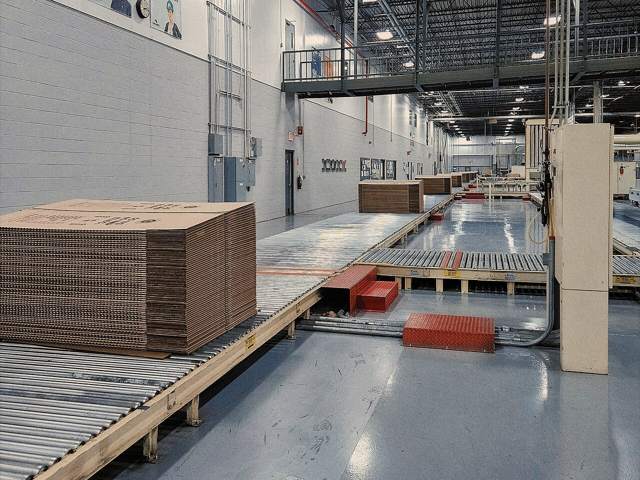
What we produce
Shipping cartons
Slotted and overlap cartons in 3, 5 and 7-ply board for warehouses, couriers and export.
E-commerce mailers & die-cut boxes
Self-locking mailers printed inside and out, from about 100 boxes on digital lines.
Shelf-ready & display
Tear-open shelf trays and counter displays for supermarket, convenience and pharmacy channels.
Folding cartons
Tuck-end, auto-bottom, sleeve and pillow cartons in Ivory, Duplex and kraft board.
Rigid gift boxes
Lid-and-base, magnetic book-style and drawer boxes, including Tết gift sets.
Inserts & fittings
Corrugated dividers, die-cut cradles and paperboard inserts to replace foam and plastic.
From board to finished box
Every box goes through the same core stages. What changes is the line: a corrugated plant for shipping cartons, an offset folding-carton plant for retail boxes, a rigid-box workshop for gift boxes, or a digital line for short runs. Choosing the right one is most of the job.
- 01
Specification
Style, inside dimensions, board grade, print method, finishes and quantity are fixed in a written spec.
- 02
Partner matching
We place the job with the plant whose equipment, run length and location fit it best.
- 03
Proof & sample
Digital proof against the dieline; plain or printed sample where needed. Nothing runs before you approve.
- 04
Tooling
Cutting die for die-cut styles; printing plates for flexo or offset. Digital printing needs neither.
- 05
Board & printing
Board is corrugated or sheeted to size, then printed directly, or printed on paper and laminated to the board.
- 06
Finishing
Lamination or varnish, spot UV, hot foil, embossing and window patching, depending on the spec.
- 07
Converting
Die-cutting, creasing, stripping waste, then folding and gluing or stitching. Rigid boxes are wrapped and built.
- 08
Inspection & delivery
Size, print and glue checks against the approved sample; packed flat (or assembled for rigid), palletised and delivered.
Board grades and flutes
Corrugated board is described by its flute (the wave in the middle) and its number of layers. In Vietnam it is usually called 3-ply (single wall), 5-ply (double wall) or 7-ply (triple wall). Thicknesses below are approximate.
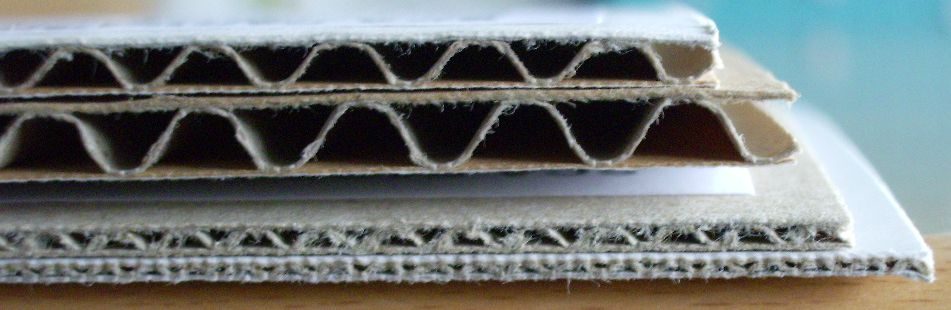
- E flute (≈1.2–1.8 mm)
- Fine, flat surface for sharp print. Mailers, retail boxes, displays.
- B flute (≈2.5–3 mm)
- Good crush resistance and print. General shipping cartons, heavier mailers, trays.
- C flute (≈3.5–4 mm)
- More cushioning and stacking strength. Standard shipping cartons.
- BC double wall, 5-ply (≈6–7 mm)
- Heavy goods, high stacks, export and long-distance freight.
- EB double wall, 5-ply (≈4–5 mm)
- Strong but with a good print face; premium shipping and display.
- 7-ply triple wall
- Industrial and bulk packaging, machinery parts, heavy export.
Liners and other boards
- Kraft liner
- Brown, strong, natural look; colours print darker.
- White-top / coated white liner
- Bright surface for vivid colour on mailers and displays.
- Ivory / FBB, Duplex (folding cartons)
- Single-layer paperboard about 250–400 gsm for retail cartons.
- Greyboard (rigid boxes)
- About 1.5–2.5 mm, wrapped in printed or specialty paper.
Printing methods
Digital (HP Indigo, inkjet)
No plates, so short runs, multiple designs and personalised versions are affordable. HP Indigo for folding cartons and labels; wide-format or single-pass inkjet for corrugated mailers and displays.
Offset litho
The standard for high-quality folding cartons at volume. For corrugated, offset-printed paper is laminated onto fluted board (litho-lamination) for photo-quality mailers and displays.
Flexo
Printed directly on corrugated board, usually 1–4 colours. Economical for shipping cartons and volume runs; plates are a one-off cost reused on repeats.
Finishes and add-ons
- Matte, gloss or soft-touch lamination
- Water-based or UV varnish
- Spot UV
- Hot foil stamping (gold, silver, holographic)
- Embossing and debossing
- Window patching (PET film)
- Inside printing
- Tear strips and perforations
- Handles and hand holes
- Ribbons, magnets, EVA or paper inserts
Typical minimums and lead times
| Box type | Typical minimum | Typical production time |
|---|---|---|
| Digitally printed corrugated mailers | from about 100 | 7–12 working days |
| Plain or 1–2 colour shipping cartons | from about 300–500 per size | 5–10 working days |
| Flexo or litho-laminated corrugated | from about 1,000 | 10–20 working days |
| Digital folding cartons (HP Indigo) | from about 100 | 5–12 working days |
| Offset folding cartons | from about 1,000–3,000 | 10–15 working days |
| Rigid gift boxes | from about 300–500 per design | 15–25 working days |
Guidance only. Exact minimums, lead times and prices depend on size, board, print and finish, and are confirmed in each quote. Lead times run from proof approval and exclude delivery; allow extra time from October to January for the Tết peak.
Tooling, explained
When a cutting die is needed
Simple slotted cartons (such as FEFCO 0201) can be made without a die. Any shaped or self-locking box (mailers, trays, tuck-end cartons, displays) needs a cutting die, made once for your size and reused on every repeat order.
Printing plates
Flexo needs one plate per colour; offset needs one plate per colour per run. Digital printing needs no plates, which is why it wins on short runs.
Samples without tooling
Prototypes are cut on a CAD sample table straight from the dieline, so you can test fit before paying for a die.
Why produce boxes through PrinterLady
The right line for each job
Our long-standing relationships across Vietnam’s print and packaging industry mean we know which plants run short digital jobs well and which are built for volume.
One contact, one spec
Mailers, cartons, labels and inserts for the same product can come from different specialists. We keep one spec and one schedule so the parts arrive together.
Checks before delivery
Proof approval before any run, then size, colour and glue checks against the approved sample before goods leave the plant.
Documents where your market needs them
For food contact, export or retailer requirements we ask partner plants for the relevant material declarations and test reports for your job.
Box manufacturing questions
What is the difference between single wall and double wall?
Single wall (3-ply) has one fluted layer between two liners; double wall (5-ply) has two. Double wall is much stronger in stacking and puncture resistance, and heavier and more expensive.
How should I give box dimensions?
Give inside dimensions in millimetres as length × width × height, where length and width are the opening (length the longer side) and height is the depth. Outside size depends on board thickness.
What is a FEFCO code?
A four-digit international code for corrugated box styles. The first two digits give the family (02 slotted, 03 telescope, 04 folders and trays, 07 ready-glued, 09 fittings), the last two the exact style. Quoting a code speeds up the quote.
Can you match my brand colours?
Yes. Give us Pantone references where you have them. Colour on kraft, white-top and coated board will look different for the same ink, so we agree a colour standard on the actual board before production.
Do you deliver outside Hanoi and Ho Chi Minh City?
Yes. Boxes are delivered flat on pallets or in bundles nationwide, and we can arrange export packing for overseas customers. Delivery cost is shown separately in the quote.
Can boxes be food-safe or FSC-labelled?
Food-contact boards, inks and coatings are available for direct food packaging. FSC-labelled packaging requires a certified plant and certified material, so tell us at the brief stage and we will propose an eligible route for your job.
Request a box quote
Style (or FEFCO code), inside size, quantity and print. Attach artwork if you have it. We usually reply within one working day.